|
I am a Ph.D. candidate (direct-track) in the Department of Computer Science and Applied Mathematics at the Weizmann Institute of Science under the supervision of Prof. Ronen Basri. I completed my M.Sc. at the Weizmann Institute of Science. Prior to that, I received my B.Sc. in Computer Science at the age of 18 from the University of Haifa through the Challenge program, which is designed for exceptional high school students. My research focuses on deep learning for 3D vision, particularly Structure-from-Motion, camera pose estimation, and visual localization. I have also worked on Vision-Language Models (VLMs) and Vision-Language-Action models (VLAs). Email / CV / Google Scholar / X / LinkedIn |

|
|
|
* denotes equal contribution |

|
Fadi Khatib*, Noam Yaari*, Meirav Galun, Ronen Basri WACV 2027 Coming soon... |
|
Fadi Khatib, Meirav Galun, Ronen Basri ECCV 2026
/
Paper /
Project Page
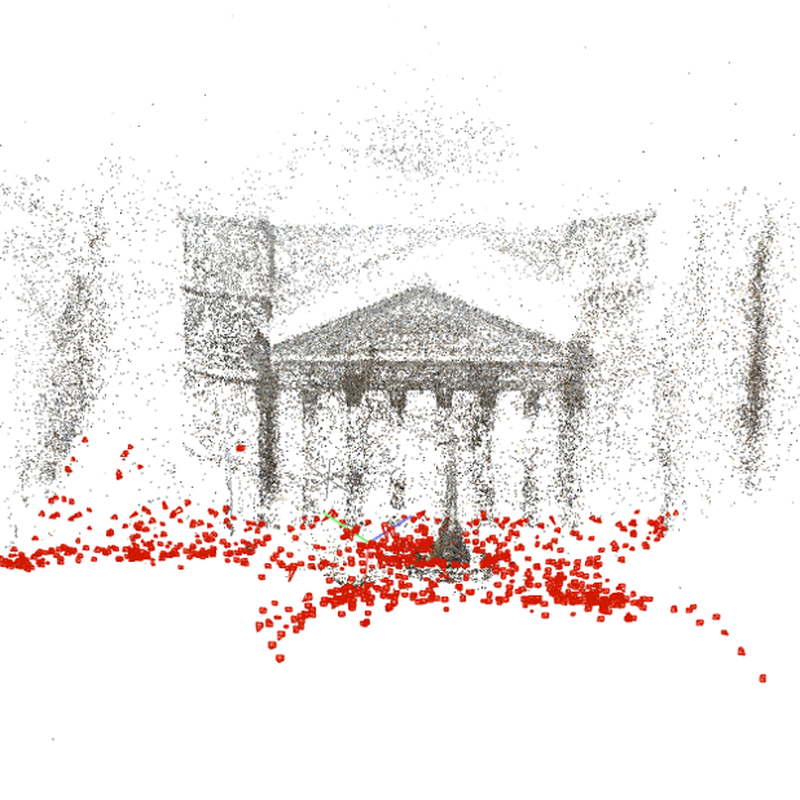
We present VGPA, a deep global Structure-from-Motion framework based on learned view-graph aggregation. A permutation-equivariant, edge-conditioned graph neural network takes noisy pairwise relative poses as input and outputs globally consistent camera extrinsics, trained without ground-truth supervision using only a relative-pose consistency objective. Followed by triangulation and robust bundle adjustment, the approach is efficient, scales to more than a thousand images, and is robust to graph density. |
|
Fadi Khatib*, Dror Moran*, Guy Trostianetsky, Yoni Kasten, Meirav Galun, Ronen Basri ICCV Workshops 2025
/
ArXiv /
Project Page
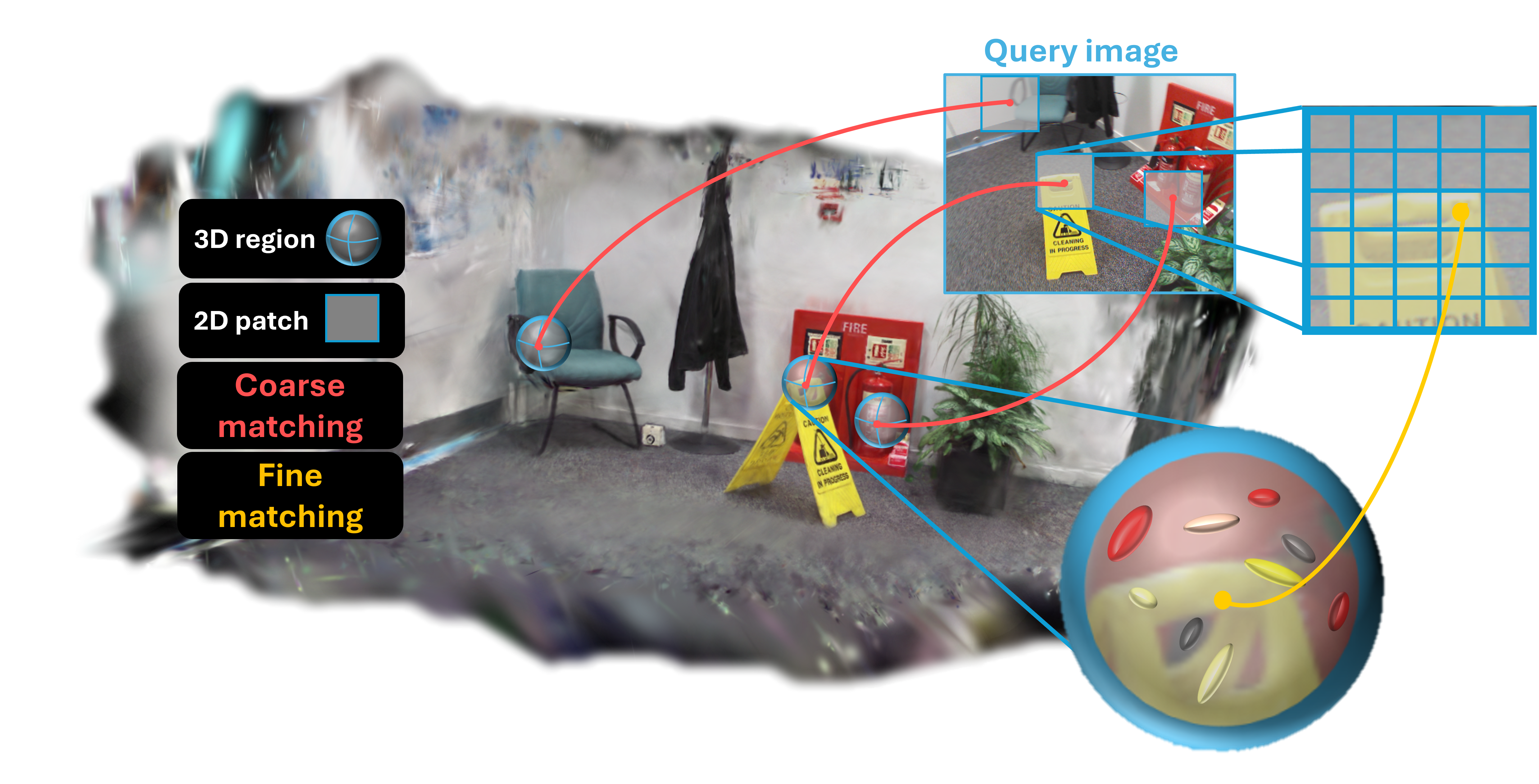
We present GSVisLoc, a generalizable visual localization method for 3D Gaussian Splatting (3DGS) scene representations. Our approach estimates camera poses by aligning features between a query image and a 3DGS model, followed by refinement for improved accuracy. GSVisLoc achieves strong results on standard benchmarks, outperforms existing 3DGS-based baselines, and generalizes well to unseen scenes without additional training. |
|
Fadi Khatib, Yoni Kasten, Dror Moran, Meirav Galun, Ronen Basri ICLR 2025
/
ArXiv /
Project Page
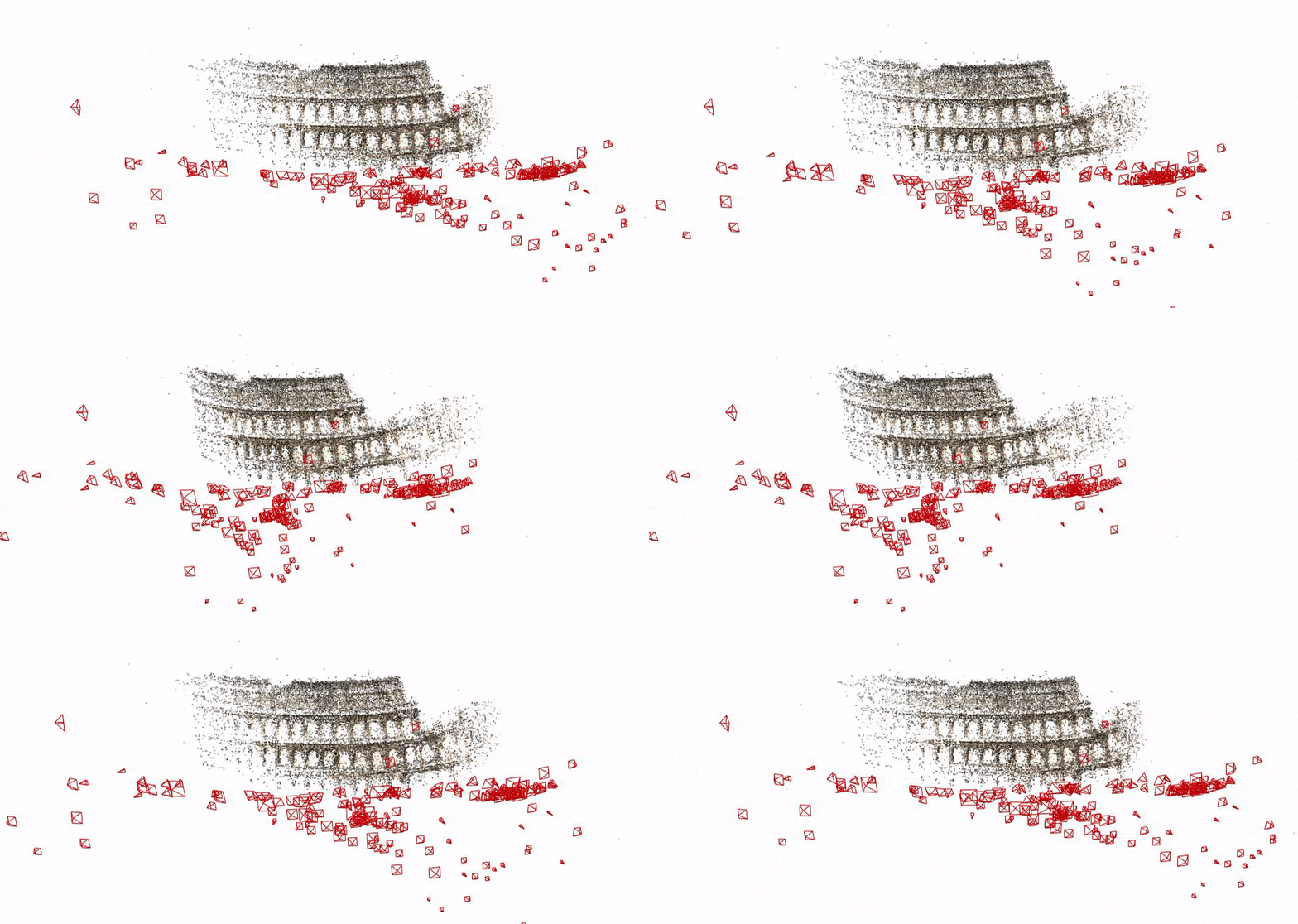
We present a robust solver based on permutation equivariant architecture for the structure from motion problem. Our proposed method can cope with a point track tensor contaminated with many outliers. In addition, we modified the bundle adjustment module to make it robust enough to handle classification errors. Our method achieves high accuracy while reducing the time significantly compared to classical methods. |
|
Dror Moran, Yuval Margalit, Guy Trostianetsky, Fadi Khatib, Meirav Galun, Ronen Basri NeurIPS 2024
/
ArXiv /
Project Page
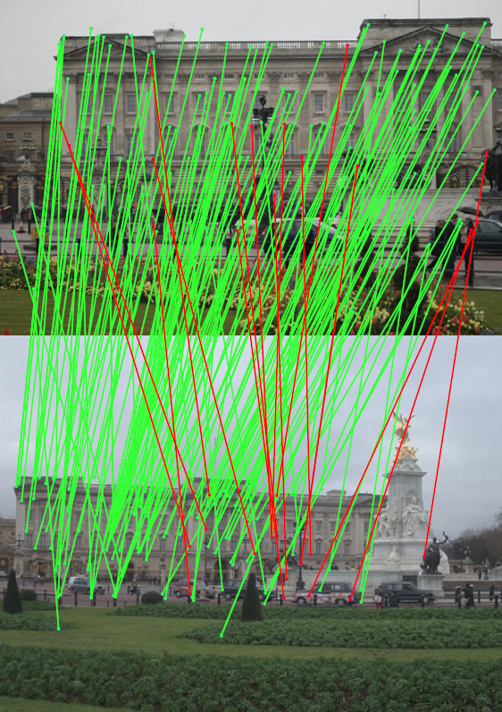
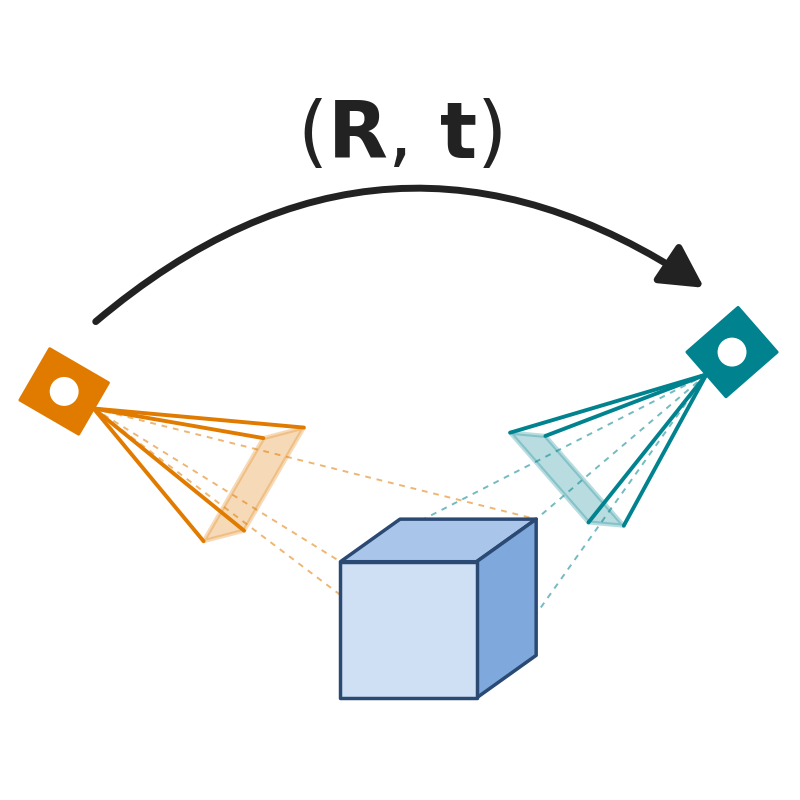
We present NACNet, a Noise-Aware Deep Sets framework to estimate relative camera pose, given a set of putative matches extracted from two views of a scene. We demonstrate that a position denoising of inliers and noise-free pretraining enable accurate estimation of the essential matrix. Our experiments indicate that our method can handle large numbers of outliers and achieve accurate pose estimation superior to previous methods. |
|
Fadi Khatib*, Yuval Margalit*, Meirav Galun, Ronen Basri GCPR 2024 (Oral)
/
ArXiv /
Project Page
We propose to leverage Image Matching (IM) as a pre-trained task for relative pose regression. Specifically, we use LoFTR, an architecture that utilizes an attention-based network pre-trained on Scannet, to extract semi-dense feature maps, which are then warped and fed into a pose regression network. |
|
|
|
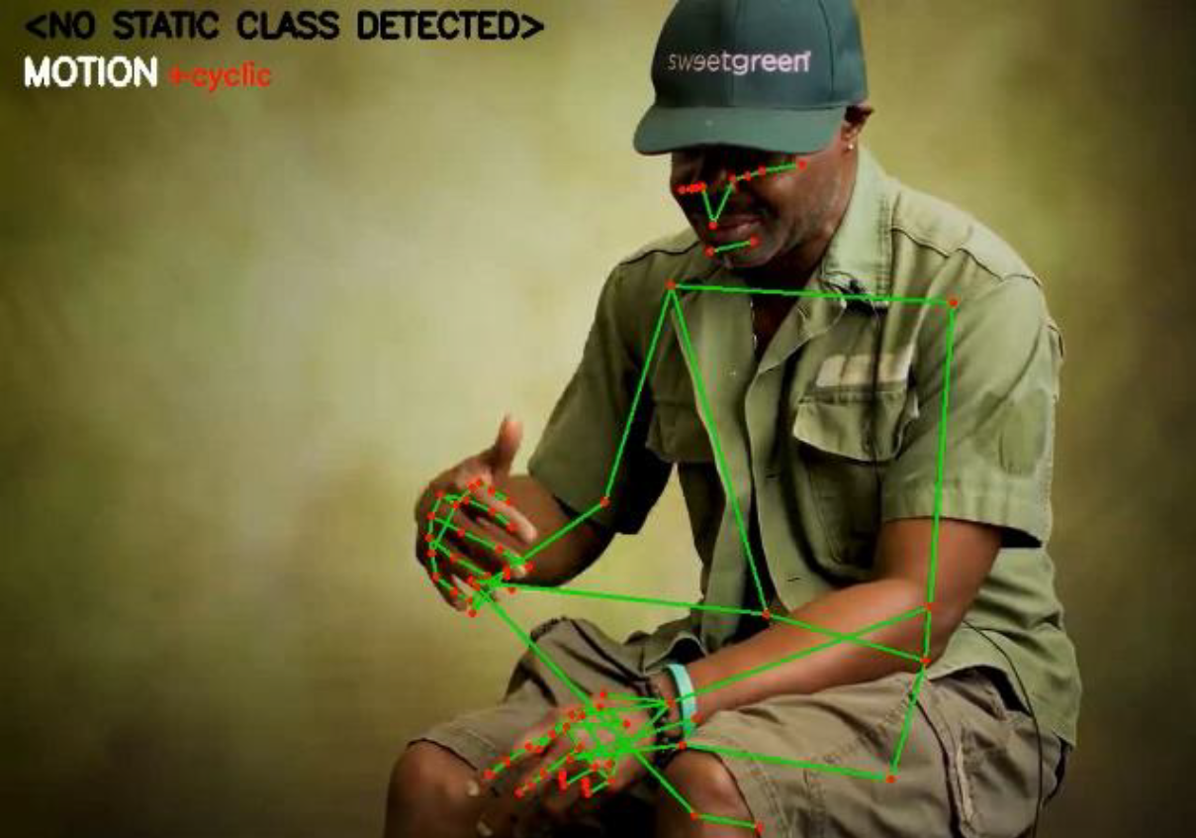
Fadi Khatib*, Julian Mour*, Hagit Hel-Or Developed a method for hands gestures detection, to be used for emotion recognition problem. By utilizing pre-trained models from Google Mediapipe for pose and hand pose estimation. |
|
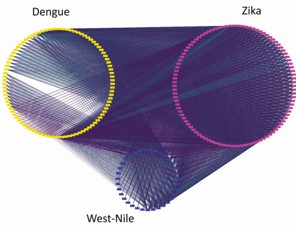
Fadi Khatib, Rachel Kolodny Worked on mapping human viral proteins, where the goal is to reveal the relation between different viruses by using computational biology methods and applying them to biological databases. |
|
|
|

|
Multiple View Geometry for Computer Vision Applications course (Spring 2025).
Introduction to computer vision course (Winter 2023, Winter 2024 , Winter 2025). |
|
|
|
This website is based on Jon Barron's template (source code) |